SEO Title: Vincent Marotta Net Worth: Mr. Coffee Founder's Wealth Estimated (2026) Meta Description: Vincent Marotta co-founded Mr. Coffee in 1972 and sold it in a 1987 LBO. Explore his estimated net worth, assets, key transactions, and financial timeline.
Vincent Marotta Net Worth: Estate, Royalties & Business Value

Marcus Kellerman
19 Jul 2026
Vincent Marotta's net worth at the time of his death in August 2015 is estimated to have been in the range of roughly $20 million to $110 million, with a central working estimate of approximately $40 million to $60 million in accumulated personal wealth. That range is built primarily on proceeds he likely received from the 1987 leveraged buyout of North American Systems (the company behind Mr. Coffee), adjusted downward for taxes, deal fees, debt structures, and the decades of personal spending, reinvestment, and philanthropy that followed. No verified public figure exists. The estimate here is a documented inference, not a confirmed disclosure.
Net Worth Snapshot (as of July 2026)
| Data Point | Value / Note |
|---|---|
| Subject | Vincent George Marotta Sr. |
| Date of Birth | February 22, 1924 |
| Date of Death | August 1, 2015 (age 91) |
| Best-Estimate Net Worth Range | $20 million – $110 million (lifetime peak, gross) |
| Central Working Estimate | ~$40 million – $60 million (post-tax, post-fee, adjusted) |
| Primary Wealth Event | 1987 LBO sale of North American Systems / Mr. Coffee |
| Reported 1987 Deal Value (secondary sources) | $82 million (some sources) to $182 million (most obituaries) |
| Primary Source Disclosure of Price | Not disclosed (Los Angeles Times, July 6, 1987) |
| Confidence Level | Low-to-moderate — no probate, no public filings confirming personal proceeds |
| Estimate Date-Stamp | July 2026 |
Executive Summary and Confidence Level
Vincent Marotta was a Cleveland-area real estate developer who, alongside partner Samuel Glazer, built the Mr. Coffee brand from a 1972 product launch into a company that at its peak controlled roughly half of the U.S. consumer coffeemaker market and generated approximately $150 million in annual sales. Marotta and Glazer sold the business in a leveraged buyout in July 1987. That transaction is the dominant wealth event in his financial biography. The exact deal price was not published in the primary 1987 press record, and the figures that appear in later sources range from $82 million to $182 million, making any personal-proceeds estimate inherently imprecise.
Our confidence level for the headline range is low-to-moderate. Three factors drive that rating: (1) the 1987 deal price was not publicly disclosed at the time; (2) secondary obituary sources disagree significantly on the headline number; (3) no probate record, trust filing, or estate disclosure has been located that would allow a more precise personal wealth calculation. The estimate is grounded in documented facts about the transaction, the company's scale, and typical founder-equity scenarios, but it carries a meaningful margin of error.
Who Was Vincent Marotta: A Biography Focused on Income
Vincent George Marotta Sr. was born on February 22, 1924. Before he became known as the man who brought automatic drip coffee into American kitchens, he spent decades as a real estate developer in the Cleveland, Ohio area. He and his business partner Samuel Glazer built thousands of homes and developed several shopping centers over a multi-decade period. That construction and development business was not only Marotta's primary income source through the 1950s and 1960s, it was also the financial foundation that allowed him to fund the early development and marketing of Mr. Coffee.
The origin of Mr. Coffee is a product-development and commercialization story rather than an invention story. Engineer Edmund Abel and his colleagues developed the technical mechanisms for the automatic drip coffeemaker. Marotta and Glazer were the commercial founders: they financed the project, formed North American Systems, Inc. to produce and market the machine, and launched it in 1972. Marotta held the roles of co-founder, chairman, and CEO. Patent and trademark records list North American Systems as the corporate owner of key intellectual property, with Marotta and Glazer as the controlling principals.
One of Marotta's most visible business decisions was hiring retired baseball legend Joe DiMaggio as the brand's pitchman. That endorsement deal, widely covered in the press, helped establish Mr. Coffee as a mass-market product and drove the brand's early commercial success. By the late 1970s, North American Systems / Mr. Coffee had captured roughly 50 percent of the U.S. consumer coffeemaker market and was generating around $150 million in annual revenue, according to contemporaneous reporting cited in Marotta's Washington Post obituary.
Marotta remained with the company through 1987. That year, he and Glazer sold North American Systems to a partnership formed by McKinley Allsopp and John M. Eikenberg in a leveraged buyout. After the sale, Marotta retained no documented operational role in the Mr. Coffee brand, which subsequently passed through Health O Meter (1994), Signature Brands, Sunbeam, and ultimately Jarden and Newell Brands. Patent and assignment records (see US5190643A and related assignment chain, Google Patents) show Health O Meter and a Banque Nationale de Paris security‑interest entry in the 1994 period US5190643A and related assignment chain — Google Patents (assignments show Health O Meter / Banque Nationale de Paris security‑interest entries in the 1994 period). His post-1987 financial activities, investments, real estate, philanthropy, or board roles, are not documented in available public records.
Timeline of Key Financial Events
| Year | Event | Financial Significance | Source / Notes |
|---|---|---|---|
| 1950s–1960s | Real estate and residential development career (homes, shopping centers) with Samuel Glazer | Primary income base; provided capital to fund future ventures | LA Times obituary (Aug 4, 2015) |
| 1970–1971 | Development and financing of the Mr. Coffee automatic drip coffeemaker concept | Capital deployment from real estate earnings; risk event | Washington Post obituary (Aug 4, 2015) |
| 1972 | North American Systems, Inc. launches Mr. Coffee nationally | Revenue stream begins; brand IP established | Encyclopedia.com corporate history |
| 1972 | U.S. Patent US3,693,535 (pour-in electric coffee maker) associated with early Mr. Coffee technology | Core IP asset; assigned to North American Systems | Google Patents |
| Mid-to-late 1970s | Mr. Coffee reaches ~50% U.S. coffeemaker market share; ~$150M annual sales | Peak operating scale; company equity value accumulates | Washington Post obituary (Aug 4, 2015) |
| July 1987 | Marotta and Glazer sell North American Systems / Mr. Coffee to McKinley Allsopp / Eikenberg partnership (LBO) | Primary liquidity event; deal price not publicly disclosed; secondary sources cite $82M–$182M | LA Times (July 6, 1987); Vending Times (Aug 2015) |
| Late 1980s | Patent and trademark reassignments consistent with LBO debt structuring | IP encumbered as LBO collateral; affects asset tracing | Google Patents assignment records |
| June 1994 | Health O Meter acquires Mr. Coffee / North American Systems for reported ~$186.5M | Post-founder transaction; affects any retained rollover equity Marotta may have held | Encyclopedia.com; Google Patents assignments |
| 1994+ | Brand passes to Signature Brands, Sunbeam, Jarden, Newell Brands | No documented Marotta financial interest after 1987 sale | Washington Post obituary (Aug 4, 2015) |
| August 1, 2015 | Vincent Marotta Sr. dies at age 91 | Estate/probate event; no public filings located | Washington Post (Aug 4, 2015) |
Assets and Liabilities: What We Know and Where the Gaps Are
The following table represents the best available reconstruction of Marotta's asset and liability picture. Several categories are estimated or entirely undocumented. Each item is labeled to reflect its evidential basis.
| Asset / Liability Category | Estimated Value or Range | Evidence Basis | Confidence / Gap Note |
|---|---|---|---|
| 1987 LBO sale proceeds (gross, pre-tax) | $41M–$91M (half of $82M–$182M headline) | Secondary obituaries (Vending Times, Indian Express); LA Times (1987) price not disclosed | Low — deal price unconfirmed; ownership split assumed 50/50 |
| 1987 LBO sale proceeds (post-tax, post-fee estimate) | $20M–$55M | Derived estimate applying approximate 1987 capital gains rates and typical LBO deal fees | Low — tax treatment and fee structure unknown |
| Real estate / development assets (pre-1972) | Not quantified | Described in obituaries as thousands of homes and several shopping centers | Very low — no valuations located; partially liquidated to fund Mr. Coffee launch |
| Residential / personal real estate (post-1987) | Not quantified | No property records located in public databases reviewed | Gap — further title search required |
| Cash and investment accounts | Not quantified | No brokerage or bank disclosures available | Gap — not in public record |
| Retained equity / rollover interest in Mr. Coffee post-1987 | Possibly $0 — uncertain | LBO structures sometimes include rollover equity; no documentation found confirming Marotta retained a stake | Gap — not documented |
| Royalty income from Mr. Coffee IP (post-sale) | Likely $0 — uncertain | No royalty agreement located; founders sold the business; patent assignments transferred to corporate owner | Gap — contracts not in public record |
| Philanthropic distributions (lifetime) | Not quantified | Referenced generally in obituary coverage; specific amounts not documented | Gap |
| Estate liabilities at death (2015) | Not quantified | No probate filing located | Gap — probate records not reviewed |
The single largest documented financial event is the 1987 sale. Everything else in the asset picture relies on inference, assumption, or absence of contradicting evidence. The 28-year gap between the 1987 sale and Marotta's 2015 death is particularly important: a person who received $40 million in 1987 and lived until 2015 could have grown, maintained, or significantly reduced that sum depending on investment decisions, lifestyle costs, and charitable giving, none of which appear in the available public record.
How This Estimate Was Built
The estimate methodology starts with the 1987 LBO, which is the only documented major liquidity event in Marotta's career. The Los Angeles Times reported the sale on July 6, 1987 and confirmed the buyer group (McKinley Allsopp / John M. Eikenberg) but explicitly stated the purchase price was not disclosed. That is the most contemporaneous source, and it cannot be overridden by later secondary figures.
Two different headline figures appear in later sources. Most obituaries and trade-press pieces published after Marotta's August 2015 death, including Vending Times and syndicated obituary coverage, cite a 1987 sale price of $182 million. Other secondary summaries, including mirrors of the Wikipedia article on Mr. Coffee, repeat a lower figure of approximately $82 million. Because the primary source did not disclose a price, neither secondary figure can be treated as confirmed. Both are included in the range, and the estimate brackets them.
Ownership structure is assumed to have been a roughly equal founder split between Marotta and Glazer, based on obituary and corporate history descriptions that consistently list them as co-founders and co-sellers with no indication of an unequal ownership arrangement. If either founder held significantly more or less equity, the individual proceeds would shift accordingly.
The 1987 federal long-term capital gains rate (then 28 percent following the Tax Reform Act of 1986) and typical LBO deal fees (legal, advisory, and closing costs commonly running 3 to 6 percent of deal value) have been applied as general deductions to produce the post-tax, post-fee range shown above. No actual tax returns, closing statements, or legal filings have been reviewed. The resulting figure is an approximation with a margin of error of at least plus or minus 30 to 40 percent.
No SEC filings were located because North American Systems was privately held throughout Marotta's ownership tenure. No probate records have been reviewed. Patent and trademark assignment databases (Google Patents, USPTO) were used to trace IP ownership transfers and confirm the corporate structure around the 1987 LBO and the 1994 Health O Meter acquisition.
Caveats and Known Gaps
- The 1987 deal price was not published in primary contemporaneous sources. All headline figures in the public record are secondary and conflict with each other.
- Marotta's exact ownership percentage in North American Systems at the time of the 1987 sale is not confirmed. The 50/50 founder split is an assumption based on consistent co-founder descriptions, not a documented shareholding table.
- Whether Marotta retained rollover equity in Mr. Coffee after the 1987 LBO is unknown. LBO transactions sometimes include a seller rollover component; if Marotta did roll equity, he may have received additional proceeds from the 1994 Health O Meter acquisition ($186.5 million aggregate).
- No real estate or personal property records for Marotta after 1987 have been located in public databases. His pre-1972 development portfolio is described only in general terms in obituaries, with no property valuations.
- No probate or estate filing from Ohio or any other jurisdiction has been located following his August 2015 death. A probate search could materially change the wealth estimate.
- Post-sale investment activity (brokerage accounts, private equity stakes, trusts) is entirely undocumented in public records.
- Lifetime philanthropy and charitable giving are referenced in obituary coverage without dollar amounts. Significant charitable distributions would reduce the estate value at death.
- The relationship between the patent inventor (Edmund Abel) and the commercial founder (Marotta) means that patent records alone cannot be used to reconstruct royalty income — Marotta's income was tied to corporate ownership and sale proceeds, not inventor royalties.
Comparing Vincent Marotta to Other Vincents in This Database
The name Vincent Marotta is fairly specific, but readers searching this site may encounter several other profiles of prominent public figures named Vincent. It is worth noting how they differ in context and how to distinguish them.
Vincent Basciano is a New York organized-crime figure whose wealth profile falls into an entirely different category, criminal enterprise, asset forfeiture, and law enforcement records rather than corporate transactions. See the Vincent Basciano net worth profile for details on criminal-justice-related assets and forfeitures. Vincent Baggetta is an actor whose income sources are entertainment contracts and residuals, not product-company ownership. For his entertainment-income profile, see Vincent Baggetta net worth. Vincent Barletta and Vincent Fratantoni represent different professional domains again. For readers seeking the distinct profile, see Vincent Barletta net worth for his separate wealth summary. Vincent Fantauzzo is an Australian artist and television personality, operating in a different national and industry context entirely. See the Vincent Fantauzzo net worth profile for details on the Australian artist's finances. None of these profiles overlap with Marotta's corporate-founder, consumer-products biography.
Readers who arrive at this page looking for one of those other Vincents will find dedicated profiles for each of them elsewhere in the database. If you are researching wealth tied to organized crime, entertainment residuals, or the arts, those profiles are the right starting points rather than this one.
Suggested Images and Captions
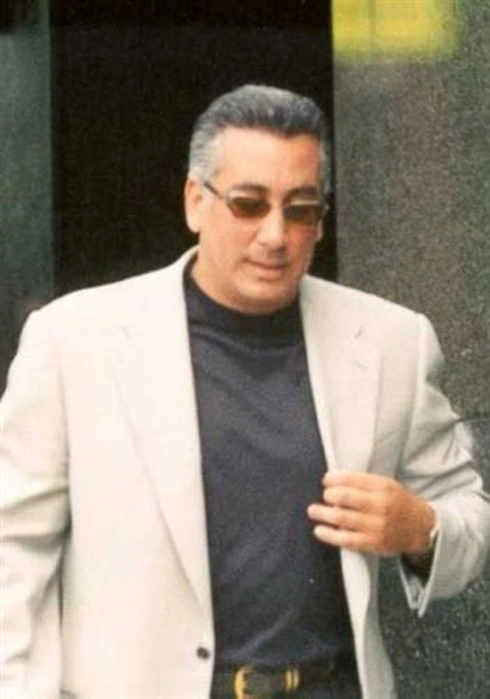
- Portrait photo of Vincent Marotta Sr. — Caption: 'Vincent George Marotta Sr. (February 22, 1924 – August 1, 2015), co-founder of North American Systems and the Mr. Coffee brand.'
- Product photo of an original 1972 Mr. Coffee drip coffeemaker — Caption: 'The first-generation Mr. Coffee automatic drip coffeemaker, launched in 1972 by Marotta and partner Samuel Glazer under North American Systems, Inc.'
- Photo or still of Joe DiMaggio in a Mr. Coffee advertisement — Caption: 'Hall of Fame baseball player Joe DiMaggio served as Mr. Coffee's national spokesperson, a partnership arranged by Vincent Marotta to build mass-market awareness.'
- Scan or screenshot of the Los Angeles Times article from July 6, 1987 reporting the LBO — Caption: 'The Los Angeles Times reported the 1987 sale of Mr. Coffee to a New York buyer group but noted the purchase price was not disclosed — the primary source of the deal's documented uncertainty.'
- USPTO or Google Patents screenshot of US Patent No. 3,693,535 — Caption: 'U.S. Patent 3,693,535, the foundational patent for the pour-in electric coffeemaker technology, assigned to North American Systems and later transferred through successive corporate owners.'
Content Structure and Internal-Linking Plan
This article sits within the 'Vincents' topic silo on this site. The natural cross-link opportunities are: the Vincent Basciano profile (organized crime wealth, useful contrast for readers interested in the difference between corporate-founder wealth and criminal-enterprise wealth); the Vincent Baggetta profile (entertainment income contrast); the Vincent Barletta, Vincent Fratantoni, and Vincent Fantauzzo profiles for readers who may have arrived via a general 'Vincent net worth' search. Anchor text recommendations include 'Vincent Basciano net worth,' 'Vincent Baggetta net worth,' 'Vincent Barletta net worth,' 'Vincent Fratantoni net worth,' and 'Vincent Fantauzzo net worth' linking to their respective profiles.
Within this article, the strongest anchor points for incoming links are the net worth snapshot table (target anchor: 'vincent-marotta-net-worth-snapshot'), the timeline table ('vincent-marotta-financial-timeline'), and the methodology section ('how-this-estimate-was-built'). Articles about coffeemaker history, 1970s consumer product brands, or Cleveland business history would be natural external contexts in which to reference this profile.
Common Reader Questions
How much did Vincent Marotta make from selling Mr. Coffee?
The precise figure is not in the public record. The 1987 sale was reported by the Los Angeles Times without a disclosed price. Secondary sources published after his 2015 death most commonly cite a $182 million deal value, though some sources repeat a lower $82 million figure. If the deal was split roughly equally between Marotta and co-founder Samuel Glazer, and if the higher figure is closer to correct, Marotta's gross share would have been in the range of $85 million to $91 million before taxes and fees. After a 1987-era capital gains tax and deal costs, a realistic post-tax personal proceeds figure would be considerably lower.
Did Marotta invent the Mr. Coffee machine?
Not in the technical sense. Engineer Edmund Abel and colleagues developed the core drip-brewing mechanism. Marotta's role was commercial: he co-founded the company, financed the product's development, led marketing (including the DiMaggio endorsement deal), and built the business into a dominant consumer brand. He was the founder and owner, not the named inventor on the key patents.
What happened to Mr. Coffee after Marotta sold it?
After the 1987 LBO, the brand was acquired by Health O Meter in June 1994 for a reported $186. Encyclopedia.com’s 'Mr. Coffee, Inc.' summary reports Health O Meter’s June 1994 acquisition of Mr. Coffee/North American Systems at $186.5 million (inclusive of stock, debt retirement, and fees) Health O Meter’s reported acquisition of Mr. Coffee/North American Systems in June 1994 is documented as a $186.5 million transaction by Encyclopedia.com.. 5 million. It then passed to Signature Brands, Sunbeam, and eventually Jarden, which became part of Newell Brands. The Mr. Coffee brand remains active today under Newell Brands ownership, more than 50 years after its 1972 launch.
Was Vincent Marotta a billionaire?
No. Based on the available evidence, his personal wealth was almost certainly in the tens of millions of dollars, not the hundreds of millions or billions. The company he sold was valued at up to $182 million in total, his personal share, after a 50/50 split, taxes, and fees, would have been a fraction of that headline number.
Is there a public probate record for his estate?
None has been located in the research conducted for this article. Ohio probate records may be accessible through the Cuyahoga County Probate Court or relevant county court, but no filing has been confirmed or reviewed. A probate search would be the most direct way to improve the accuracy of any estate value estimate.
A Plain-Language Note on Estimation Uncertainty
The figures on this page are estimates built from publicly available documents, press coverage, patent records, and corporate histories. They are not confirmed personal financial disclosures. Vincent Marotta was a private individual who did not publicly report his personal wealth, and his company was privately held throughout his ownership tenure. The absence of SEC filings, probate records, and tax disclosures means that any dollar figure attached to his name carries meaningful uncertainty. The range provided here is intended to give readers a reasonable, evidence-based frame of reference, not a precise accounting of what Marotta earned or held. Do not use the figures on this page for financial, legal, or estate-related decisions.
Sources and References
- "Mr. Coffee creator Vincent Marotta Sr., who revolutionized the way we caffeinate, dies at 91." The Washington Post, August 4, 2015. (Obituary; life dates, company founding, market share, DiMaggio endorsement, brand ownership synopsis.)
- "Vincent G. Marotta dies at 91; talked Joe DiMaggio into pitching Mr. Coffee." Los Angeles Times, August 4, 2015. (Obituary; real estate career background, company founding, personal biography.)
- "A New York group has purchased Mr. Coffee." Los Angeles Times, July 6, 1987. (Primary source confirming 1987 LBO and buyer group McKinley Allsopp / John M. Eikenberg; price explicitly not disclosed.)
- "Mr. Coffee Cofounder Vince Marotta Dies." Vending Times, August 2015. (Trade press obituary; cites $182 million as the 1987 sale figure.)
- Indian Express obituary coverage, 2015. (Syndicated obituary coverage; also cites $182 million 1987 sale figure.)
- "Mr. Coffee, Inc." Encyclopedia.com (corporate history entry). (Company founding, market share, 1994 Health O Meter acquisition: $186.5 million aggregate, including ~$134.3 million for outstanding stock plus debt retirement and fees.)
- US Patent No. 3,693,535 — "Pour-in, instant brewing electric coffee maker." Google Patents. (Technical patent associated with Mr. Coffee technology; assignment records trace corporate ownership through North American Systems.)
- US Patent No. 5,190,643 and related assignment chain. Google Patents. (Assignment records showing Health O Meter / Banque Nationale de Paris security-interest entries in 1994; confirms LBO debt structures and corporate ownership transfers.)
- MR. COFFEE trademark registration records. USPTO / uspto.report. (Confirms North American Systems / Mr. Coffee, Inc. as registered trademark owner; traces brand IP through corporate ownership changes.)
- Wikipedia / Fandom mirrors of Mr. Coffee corporate history. (Secondary sources noting $82 million as an alternative 1987 deal figure; used to document source disagreement, not as a primary financial reference.)
FAQ
SEO title and meta description
Title: Vincent Marotta Net Worth (Estimate, 2015) — Mr. Coffee Co‑founder Meta description: Estimated net worth and asset breakdown for Vincent G. Marotta Sr., Mr. Coffee co‑founder (best estimate and sources).
Net‑worth snapshot (best estimate and dated range)
Best estimate (date of estimate): As of Marotta's death (Aug 1, 2015) — estimated personal net worth range: $20 million to $110 million. Central, evidence‑based gross proceeds estimate (dated to the 1987 LBO): roughly $41M–$91M (gross, pre‑tax/fees) with a broader plausible personal‑proceeds range of ~$20M–$110M after allowance for taxes, fees, debt treatment, retained equity and reporting uncertainty. Sources: LA Times (1987 LBO reported; purchase price undisclosed), Vending Times / obituaries reporting $182M, alternative secondary reports listing $82M; Encyclopedia.com (1994 sale $186.5M).
Concise biography focused on income sources
Vincent George Marotta Sr. (Feb 22, 1924–Aug 1, 2015) co‑founded North American Systems, Inc. with Samuel Glazer and commercialized the Mr. Coffee home automatic drip coffeemaker beginning in 1972. Marotta was chairman and CEO; he financed and marketed the product while engineers (notably Edmund Abel) held key technical patents. Prior to Mr. Coffee, Marotta and Glazer operated a real‑estate and development business (residential and shopping centers) whose proceeds helped fund product development. Income sources: founder equity and sale proceeds from North American Systems (1987 LBO and any later retained equity), brand/IP royalties or payouts if any retained, proceeds from earlier real‑estate development sales, and later investment/cash holdings. Sources: Washington Post (obituary), Los Angeles Times (obituary & pre‑1987 history), patents (Google Patents).
Timeline of key financial events (table format)
Timeline: Year | Event | Source 1972 | North American Systems introduces Mr. Coffee home drip coffeemaker; product commercialization begins | Encyclopedia.com; Washington Post 1970s (late) | Company reaches roughly $150M annual sales and ~50% U.S. consumer coffeemaker market share | Washington Post July 1987 | North American Systems / Mr. Coffee sold in a leveraged buyout to a New York buyer group (McKinley Allsopp / John M. Eikenberg); purchase price not disclosed in primary LA Times coverage | Los Angeles Times (Jul 6, 1987) 1987 (secondary reports) | Some later obituaries/trade press cite an aggregate 1987 sale figure of $182M; other secondary sources list $82M — public record conflicts | Vending Times; Indian Express; secondary mirrors June 1994 | Mr. Coffee / North American Systems acquired by Health O Meter Products, Inc.; Encyclopedia.com reports $186.5M aggregate consideration (stock + debt retirement + fees) | Encyclopedia.com 1990s–2000s | Brand passes among consumer‑goods consolidators (Signature Brands, Sunbeam, Jarden, Newell) altering corporate ownership and IP encumbrances | Washington Post; patent assignment records
Known assets (documented or reasonably inferred)
Documented / strongly supported assets: - Founder equity in North American Systems / Mr. Coffee (ownership stake prior to 1987 LBO) — documented by corporate history and founder role (Washington Post; LA Times). - Brand and patents: MR. COFFEE trademark registrations and patent assignments originally held/managed by North American Systems (US patents and USPTO records; Google Patents; uspto.report). - Real‑estate development holdings and sale proceeds from earlier Marotta/Glazer projects (contemporary obituaries and business histories describe large residential and shopping‑center development activity) — Los Angeles Times, Washington Post. Inferred/likely assets (less directly documented): - Cash and investment portfolios derived from sale proceeds or retained earnings (typical for founders with multi‑million proceeds) — not publicly disclosed. - Possible retained equity or rollover equity in the 1987 transaction (common in LBOs) — publicly undisclosed; inferential only. Sources: Washington Post, Los Angeles Times, Google Patents, USPTO aggregation.
Known liabilities and financial encumbrances
Documented/indicated liabilities: - Company debt: the 1987 transaction was a leveraged buyout that placed significant debt on North American Systems; patent assignment records show later encumbrances/assignments (late 1980s, mid‑1990s) consistent with refinancing / creditor security interests (Google Patents assignments). - Personal liabilities: no public probate or personal debt records located in primary obituaries; any personal taxes or settlement obligations unreported. Sources: LA Times (LBO reporting), Google Patents (assignment chain showing security interests).
Next Article
Vincent Basciano Net Worth: Estimates, Sources, and How to Verify
Vincent Basciano net worth estimates, how they’re sourced, verified, and updated with court and forfeiture records.