
Vincent Ingala is a contemporary jazz musician from Connecticut, and as of May 2026, credible net worth estimates for him sit somewhere in the range of $500,000 to $1.5 million, with the most commonly cited figure being around $1 million. That said, none of the published numbers come from verified financial disclosures, so treat any specific figure as an informed estimate rather than a confirmed fact.
Vincent Ingala Net Worth: Estimate, Sources, and How It’s Calculated

Marcus Kellerman
16 May 2026
Who Vincent Ingala actually is

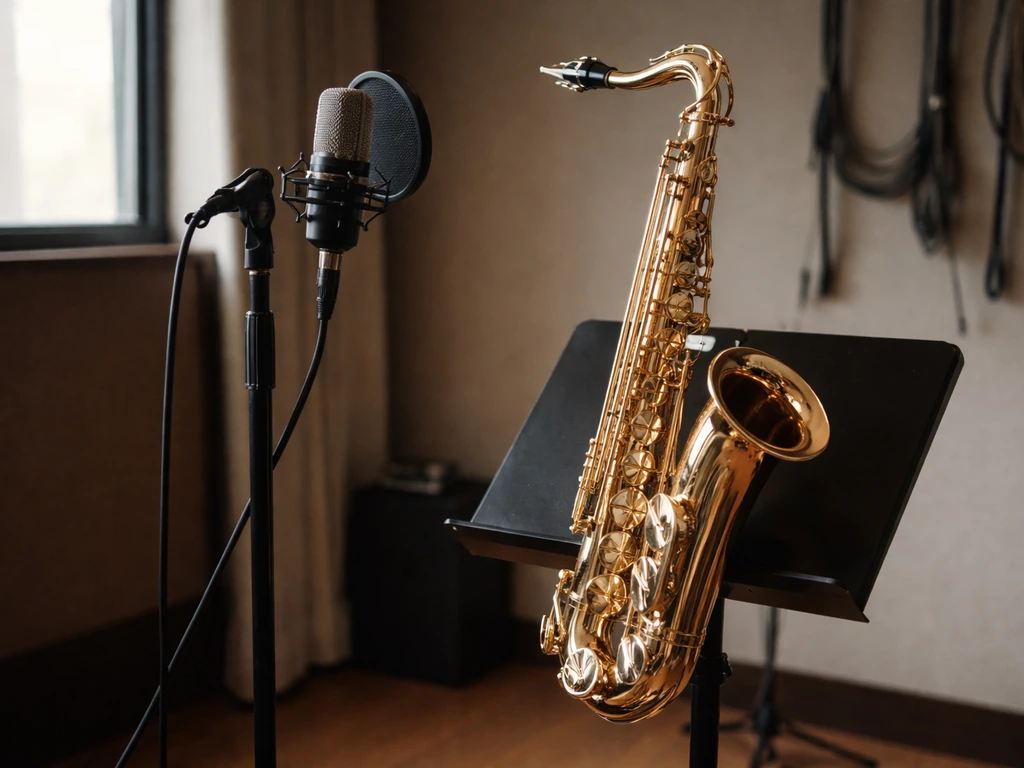
Vincent Ingala is a multi-instrumentalist and recording artist blank" rel="noopener noreferrer">born December 10, 1992, in Prospect, Connecticut. He's best known as a tenor saxophonist working in the contemporary and urban jazz space, and he's been releasing music since around 2010. He's a recognized Yamaha Artist, which puts him in company with other professional, industry-endorsed musicians and confirms this is a working, credible professional musician rather than an obscure or amateur name.
The name disambiguation matters here. A LinkedIn search pulls up multiple people named Vincent Ingala across different industries. If you've landed on a net worth claim that doesn't mention jazz, saxophone, Connecticut, or music recording, you're probably looking at information about a different person entirely. If you are specifically searching for Vincent Golshani net worth, be sure you are looking at verified, person-specific sources and not generic estimates for someone with a similar name. Always anchor the identity using non-financial facts first: birth date (December 10, 1992), instrument (tenor sax), and genre (contemporary/urban jazz). If those don't match, walk away from the estimate.
The numbers people quote and what they're based on
The most frequently cited figure you'll encounter is around $1 million. If you are specifically looking for Vincent Ingala net worth, the most defensible starting point is the evidence-based range discussed earlier, along with skepticism toward single-number claims. You can compare how these estimated figures for Vincent Ingala differ from the way Vincent van Gogh net worth is discussed, since the sources and historical context are completely different. PeopleAI, one of the more visible estimator sites, published a February 2026 estimate of $1.06 million, with prior-year figures of $952,000 for 2025 and $846,000 for 2024, showing a steady upward trend. On the higher end, a site called Celebrity Birthdays claims $5 million, attributing the figure to 'Wikipedia, Forbes, and Business Insider,' none of which actually publish net worth data for independent jazz artists. Celebrity Birthdays likewise lists a $5 million net worth for Vincent Ingala, but it does not provide a primary financial basis for that figure in its snippet Celebrity Birthdays claims $5 million. That $5 million number should be treated with heavy skepticism.
A reasonable working range for research purposes is $500,000 to $1.5 million. The lower bound reflects a successful independent musician with solid touring and recording income but without major crossover commercial success. The upper bound accounts for accumulated royalties, business interests, and assets that aren't publicly visible. The $1 million midpoint is the most defensible single-number estimate given available evidence.
How net worth gets calculated for independent musicians

For a figure like Vincent Ingala, who doesn't appear on stock exchanges or in corporate filings, estimators typically work from a combination of observable data points. Album sales, streaming royalties, touring revenue, merchandise, and any brand partnerships or endorsements (like his Yamaha Artist relationship) all factor in. They subtract known liabilities and make assumptions about savings and asset accumulation over a career. The resulting figure is an educated guess, not an audit.
The challenge is that independent jazz musicians don't file publicly accessible earnings reports. Streaming platforms pay per-stream royalties that are difficult to reverse-engineer without access to the artist's account data. Tour grosses for smaller venues rarely make it into public databases the way major concert tours do. So even a careful estimator is working with significant gaps.
Where the money comes from
Ingala's income streams follow the standard model for a working independent jazz artist with a decade-plus career:
- Album sales and streaming royalties across multiple releases since 2010
- Live performance fees from venues, festivals, and private events
- Licensing income if his music appears in film, TV, or advertising
- The Yamaha Artist relationship, which may include instrument sponsorship and promotional arrangements
- Music production or session work for other artists
- Teaching, clinics, or masterclasses, which many professional musicians use as a steady income layer
- Any personal real estate or investment holdings accumulated over his career
None of these income streams are individually documented in public records for Ingala, but they represent the typical wealth-building toolkit for a musician at his level. A sustained recording and touring career starting in his late teens gives him a longer runway than many independent artists, which is one reason the progressive estimates from sites like PeopleAI show steady year-over-year growth.
What can complicate or reduce the estimate
Net worth estimates for independent musicians tend to be inflated because they often ignore the real costs of the business. Recording costs, studio time, music video production, touring expenses (travel, crew, accommodation), agent and manager commissions (typically 10 to 20 percent of gross), and platform distribution fees all come off the top before an artist sees a dollar of profit.
There's also the reality that the jazz market, while loyal, is relatively small compared to pop or hip-hop. High artistic credibility doesn't always translate to high income. If Ingala carries any business debt from early-career investments in recording or equipment, or has personal financial obligations not reflected in any public record, the true net worth figure could be meaningfully lower than the $1 million estimate.
Why different websites give you different numbers
The variance between the $1.06 million (PeopleAI) and $5 million (Celebrity Birthdays) estimates comes down almost entirely to methodology, or the lack of it. Here's how to read what different types of sources are actually doing:
| Source Type | How They Estimate | Reliability |
|---|---|---|
| PeopleAI-style estimators | Algorithm-driven, based on 'social factors' (their own wording), not financial records | Low to moderate; useful for rough trend direction only |
| Celebrity Birthdays-style aggregators | Often copy or inflate numbers from other estimators; cite authoritative sources (Forbes, Wikipedia) that don't actually contain the data | Low; treat as placeholder figures |
| Verified biographies or financial journalism | Based on interviews, documented deals, court records, or structured financial reporting | High; rarely exists for independent jazz musicians |
| Court records or legal filings | Actual financial disclosures made under legal obligation | Very high; rarely publicly available unless litigation involved |
PeopleAI's own disclaimer says its numbers are 'calculated based on a combination social factors,' which is a transparent admission that the output is a model estimate, not a researched figure. That's not automatically useless, but it does mean you shouldn't quote it with precision. The $5 million figure from Celebrity Birthdays has no traceable methodology at all, which makes it the less trustworthy of the two despite sounding more impressive.
How to verify the numbers yourself

If you want to do your own due diligence on Vincent Ingala's net worth, here's a practical checklist:
- Confirm identity first: check that any net worth source is describing a tenor saxophonist born December 10, 1992, from Connecticut who has released music since 2010. If those details don't appear, don't trust the number.
- Check the Yamaha Artist page: it's an official industry endorsement that confirms his professional status and gives you a baseline for assessing career credibility.
- Look for his discography on Spotify, Apple Music, or AllMusic to count albums and estimate a streaming footprint, which loosely correlates with royalty income.
- Search for any tour dates or venue bookings on Bandsintown or Songkick to gauge his touring activity level.
- Cross-reference any net worth number against at least two sources. If both low-credibility sources agree, that's still two low-credibility sources agreeing.
- Ignore any estimate that cites Forbes or Wikipedia as a source for the net worth itself. Those platforms don't publish net worth estimates for independent jazz musicians.
- Accept that the true number is probably unknowable with precision. A range of $500,000 to $1.5 million is the most honest answer given what's publicly accessible.
Net worth vs. income vs. lifestyle: what you're actually measuring
One thing worth clarifying is that 'net worth' and 'income' are not the same thing. Net worth is what's left after you subtract all liabilities from all assets. A musician who earns $200,000 a year but has $50,000 in business debt and rents rather than owns property might have a relatively modest net worth despite a comfortable lifestyle. Conversely, someone who invested early in real estate or holds significant royalty assets could have a net worth well above what their income suggests. Neither situation is unusual for a working musician in their early thirties.
Vincent Ingala started recording professionally as a teenager, which means he's had roughly 15 years to build both income and assets by the time of this writing in May 2026. That longer runway supports the $1 million range more than it supports either the very low or very high end of estimates you might find online. It's also worth noting that other musicians in the contemporary jazz space with similar career trajectories and recognition levels tend to land in a similar ballpark, which gives the middle-range estimate additional plausibility even without hard financial data.
If you're researching wealth data for other figures in this space, the same verification approach applies regardless of the subject. Whether you're looking at another entertainer, a historical figure like Vincent Van Gogh (whose financial situation was dramatically different, shaped by poverty and posthumous commercial success), or contemporary professionals in other fields, the method stays consistent: identify the person correctly first, evaluate the source's methodology, and hold any specific figure loosely unless it comes from a verifiable disclosure.
FAQ
Why do net worth estimators disagree so much for Vincent Ingala, including the $5 million outliers?
Most big gaps come from methodology differences. Some sites model income and savings using generic assumptions, while others output a single number with little or no traceable calculation. If a figure is not tied to identifiable inputs (releases, touring patterns, royalty likelihood, asset ownership signals) treat it as speculative, especially when the site cites unrelated brands or broad sources without showing how they map to Ingala.
What should I verify first to avoid mixing up different people named Vincent Ingala?
Start with at least two non-financial identifiers that are specific to the musician, for example his December 10, 1992 birth date and his tenor saxophone role in contemporary or urban jazz, ideally also Prospect, Connecticut. If the source text or biography does not match those points, do not carry the net worth number over, because name collisions are common across LinkedIn and public profiles.
How can I tell whether an estimate is using “royalties” versus just guessing from social reach?
Look for wording that indicates royalty modeling tied to specific catalog signals, such as number of releases, distribution scale, or time in the market. If the methodology emphasizes follower counts or general social factors without linking to catalog and revenue mechanisms, it is likely more attitude-based than evidence-based.
Does Vincent Ingala’s Yamaha Artist status mean his net worth is reliably high?
Not by itself. Yamaha Artist recognition mainly signals professional standing and endorsement relationships, but it does not equal disclosed financial performance. It can correlate with income opportunities, yet the effect on net worth depends on how often those endorsements convert into paid work and whether other costs and liabilities offset gains.
Why streaming data is hard to use for a precise net worth calculation in this case?
Because public stream counts do not reveal the artist’s effective royalty rate, splits, or which tracks are tied to which contracts. Without access to his distribution agreements and streaming account details, estimates can only model broad ranges, so precision is usually misleading.
What expenses typically reduce a working independent jazz musician’s net worth from gross earnings?
Common deductions include recording and production costs, touring and travel expenses, crew and venue splits, and management or agent commissions (often cited around 10 to 20 percent of gross). Platform distribution fees and marketing costs also matter, so a high-feeling headline income can still translate into a smaller net worth after liabilities and ongoing expenses.
Can “net worth” be lower than expected even if Vincent Ingala is actively touring and releasing music?
Yes. A musician can have strong cash flow yet limited net worth if they rent rather than own major assets, carry business debt from early career investments (equipment, studio time, production), or have personal obligations not reflected in public data. Estimators often underweight debt and overemphasize asset accumulation.
If I want my own estimate for Vincent Ingala, what is a practical approach that beats copying a single number?
Build a range using inputs you can substantiate: approximate release volume and career length, likelihood of touring frequency, probability of steady royalty streams from catalog, and typical deductions for a working independent artist. Then apply a conservative savings assumption rather than assuming all net income compounds into assets. The goal is a bracket, not an audit-level figure.
Is the $500,000 to $1.5 million range reasonable to use, or could it be wildly wrong?
It could shift, but the main reason the range is used is that independent jazz data is sparse and liabilities are unknown. If future disclosures appear (for example, verified business ownership details, major publishing catalog sales, or confirmed revenue milestones), the midpoint could move. Until then, a wide range is usually the most honest way to report uncertainty.
Where should I be extra cautious when a site claims it used “Forbes” or “Business Insider” for a net worth number?
Be cautious when the claim of sourcing is broad and the methodology is not shown. If those outlets do not publish net worth for independent jazz artists, the number is likely not derived from them. Treat it as a promotional citation unless the site explains how it converted any referenced material into a Vincent Ingala-specific calculation.
Next Article
Vincent van Gogh Net Worth: Estate vs Wealth Estimates
Vincent van Gogh net worth explained with realistic range, estate vs lifetime wealth, and why sites disagree